Choosing the Right Blinds for Every Room in Your Melbourne Home
Reading time:
Moving house tends to expose a myth pretty fast: that one blind style suits every window. It doesn’t. The living room and the laundry are trying to do completely different jobs, and a blind that’s perfect in one is often the wrong call in the other.
We get asked some version of “just tell me what to put everywhere” a lot. Fair question. Here’s the best guide: Choosing the Right Blinds for Every Room in Your Melbourne Home.
Start With Which Way the Room Faces
One thing worth clearing up first, because it trips people up: in Australia, north-facing rooms get the most sun, not south-facing. It’s the opposite of what a lot of Northern Hemisphere advice assumes, and if you’ve read a home decor blog written for a US or UK audience, this is exactly where it’ll lead you astray. A north or west-facing room in Melbourne is working with real heat and glare for a decent chunk of the day. That single fact should shape almost every decision below.
Living Room
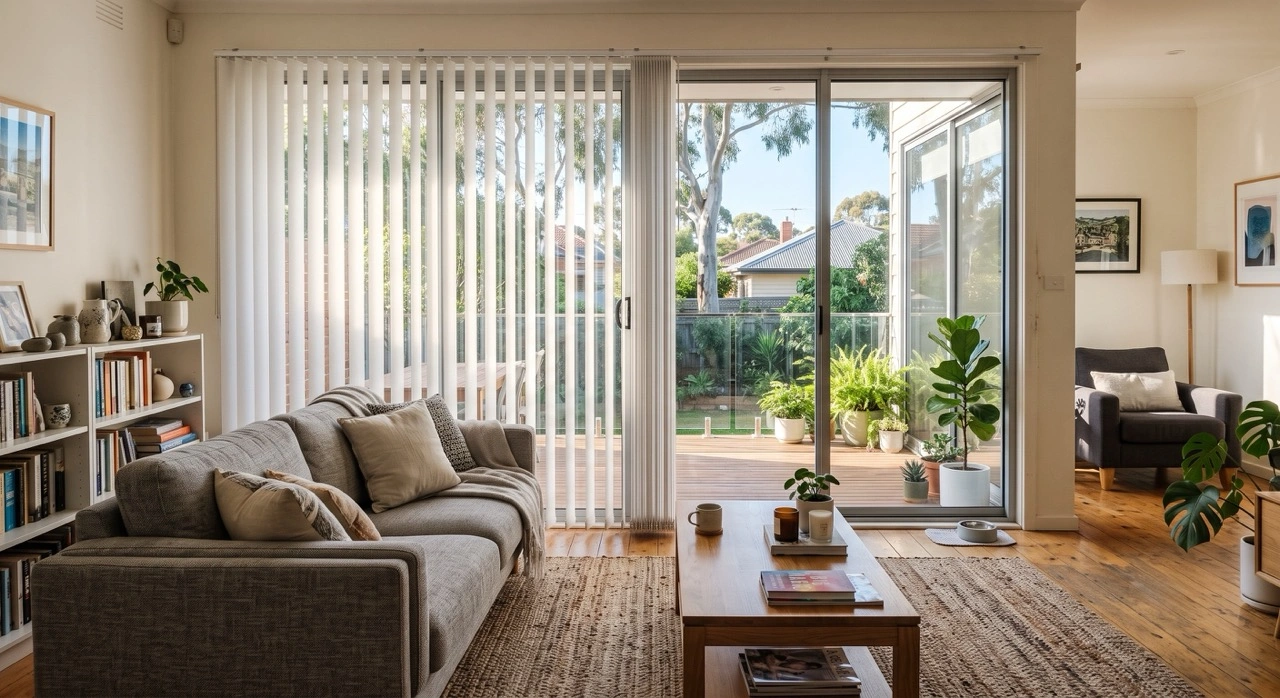
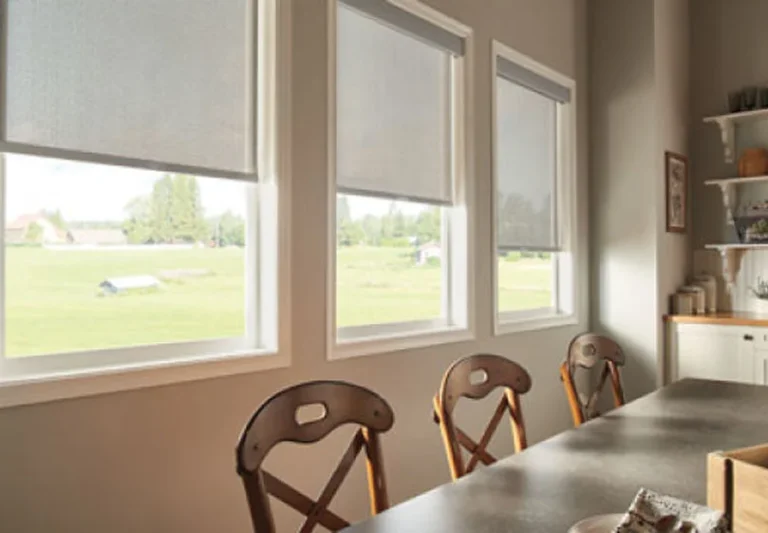
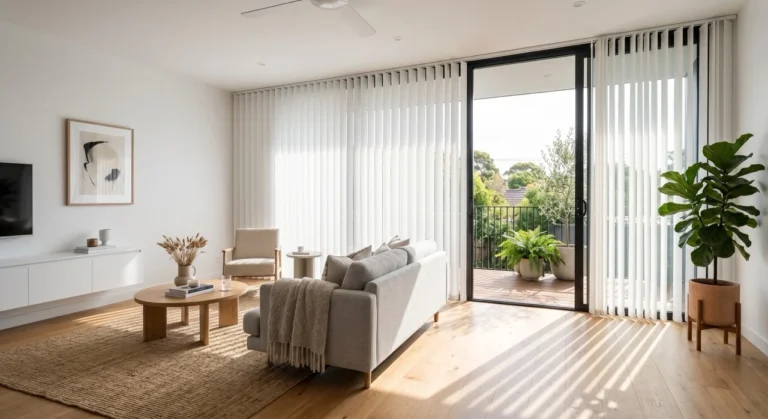
This is usually the room doing the most jobs at once – TV nights, guests, kids doing homework, the everyday in-between hours. Light-filtering fabric tends to be the right default here, especially on a north or west-facing window or sliding door. It softens harsh light without shutting the room off from the outside, which matters if this is also where your sliding door leads out to a deck or garden.
If the room is mostly used at night – a dedicated media room, say – blockout earns its keep. Otherwise, save full blockout for the bedroom, where it actually matters more.
Bedroom
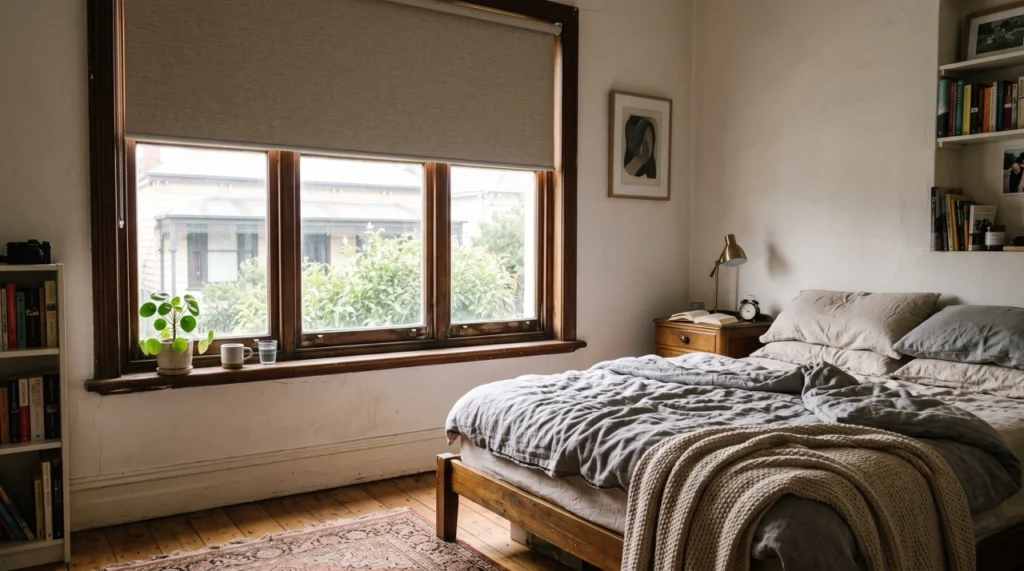
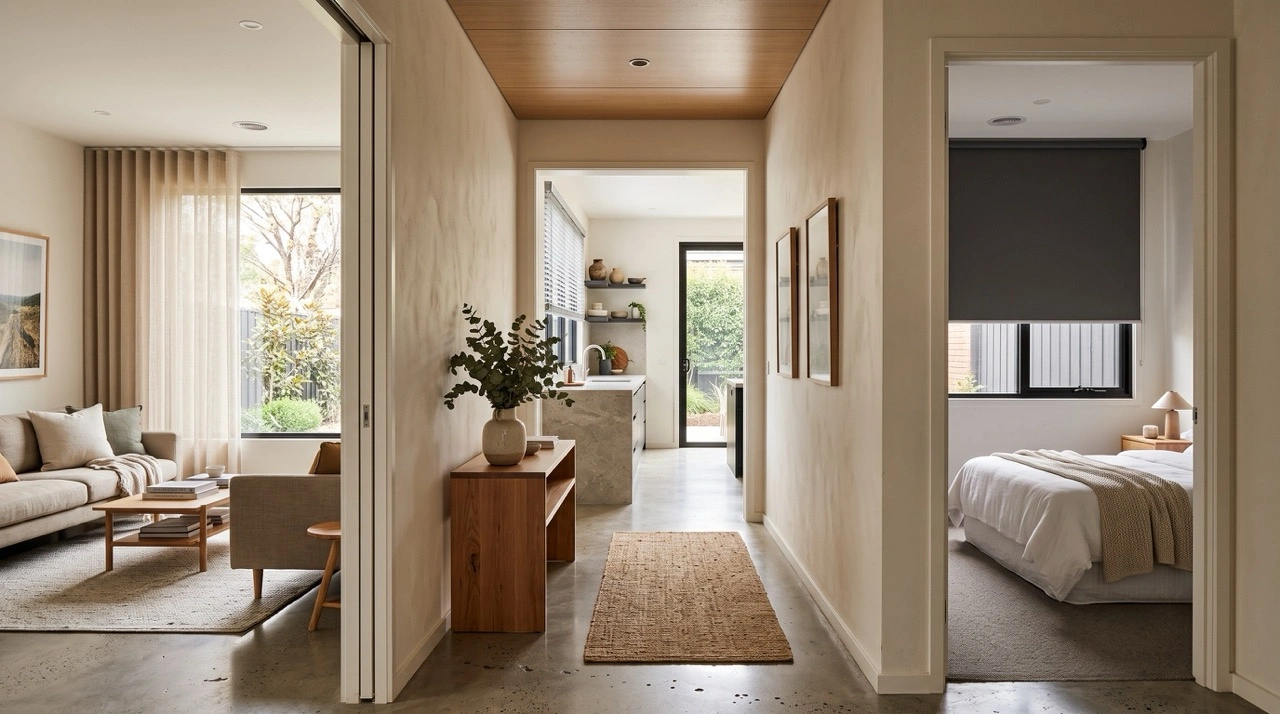
Sleep is the priority, so this is where blockout fabric makes the most sense, particularly if the room catches early sun. A dark room genuinely helps with sleep quality, and there’s a secondary benefit too: solid blockout fabric adds real insulation value, which counts for something on both ends of a Melbourne winter and summer.
Bathroom and Laundry
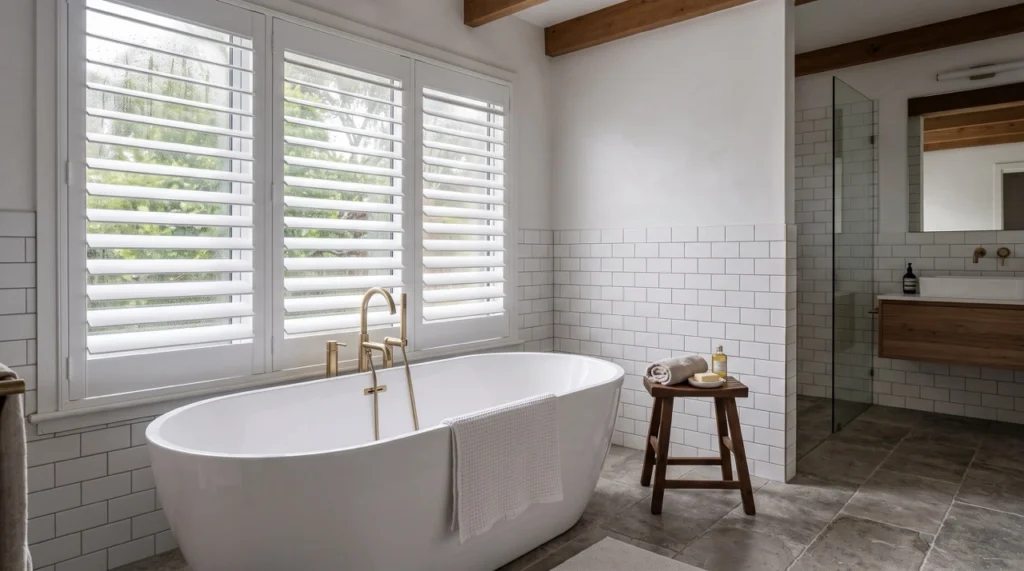
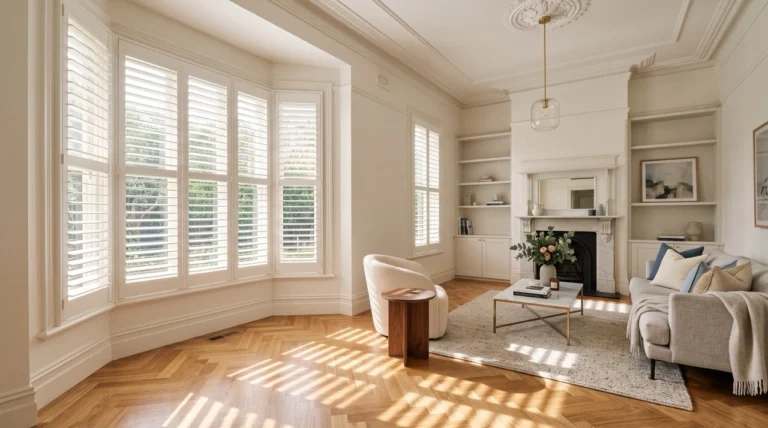
Moisture is the whole story here. Fabric blinds in a bathroom are fighting a losing battle against condensation and mould over time. Vinyl or PVC blinds handle it fine, and if you’re leaning toward plantation shutters for the rest of the house, a moisture-resistant PVC option is built specifically for wet areas and won’t warp the way timber can.
Kitchen
Similar logic to the bathroom, with grease and splashes added to the mix. Vinyl or PVC vertical blinds wipe clean in seconds, which matters more than people expect once you’re three months into actually cooking near the window. Keep whatever you choose clear of the stove – both for the obvious fire-safety reason and because heat close-up will age fabric fast.
Home Office
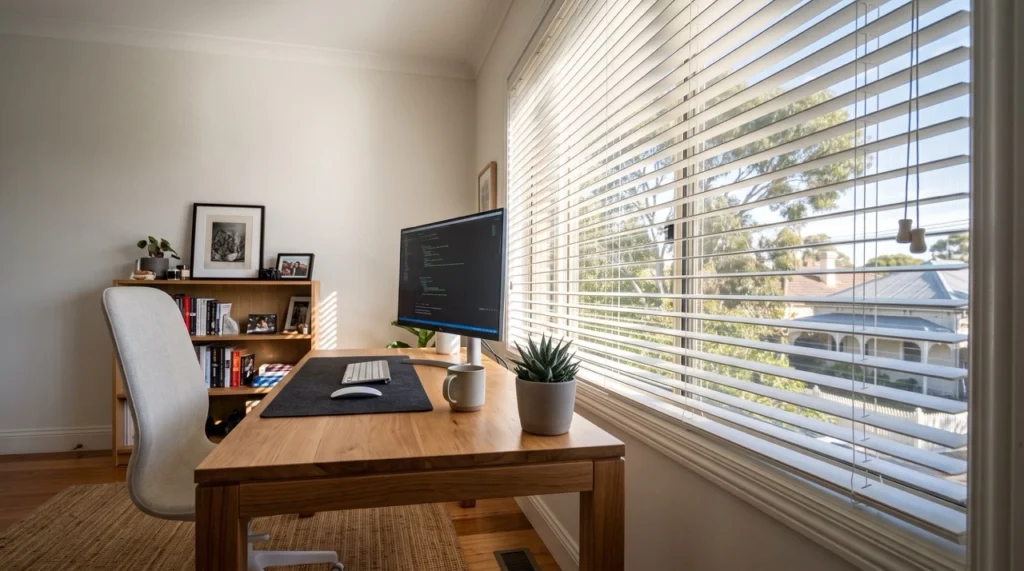
This one gets less attention than it should, and there’s actual research behind why. Glare and screen reflection are two different problems with two different fixes. If sunlight is landing directly on your screen, tilting slats to redirect it – rather than closing the blind entirely- solves it without turning your office into a cave. If it’s a reflection problem (a bright window behind you, bouncing off the screen), the fix is really about desk position: monitors placed perpendicular to the window, not facing it or backed onto it, cut most of the problem before the blind even comes into it.
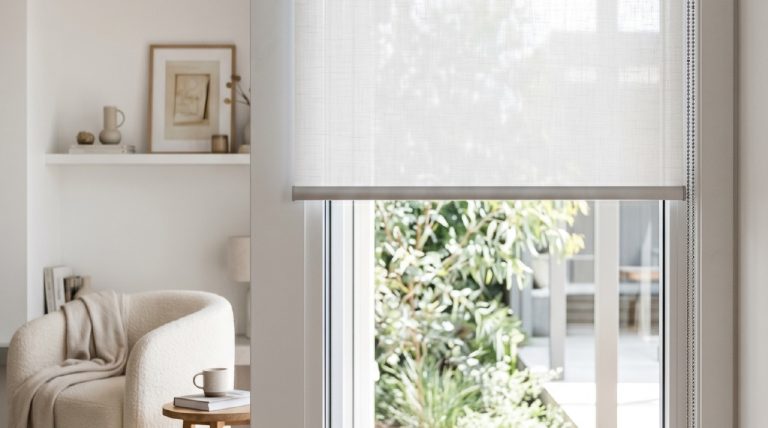
For the blind itself, light filtering or sunscreen fabric with good tilt control gives you both – enough daylight to stay alert through a workday, without the glare that makes your eyes ache by 3 pm.
Kids’ Rooms
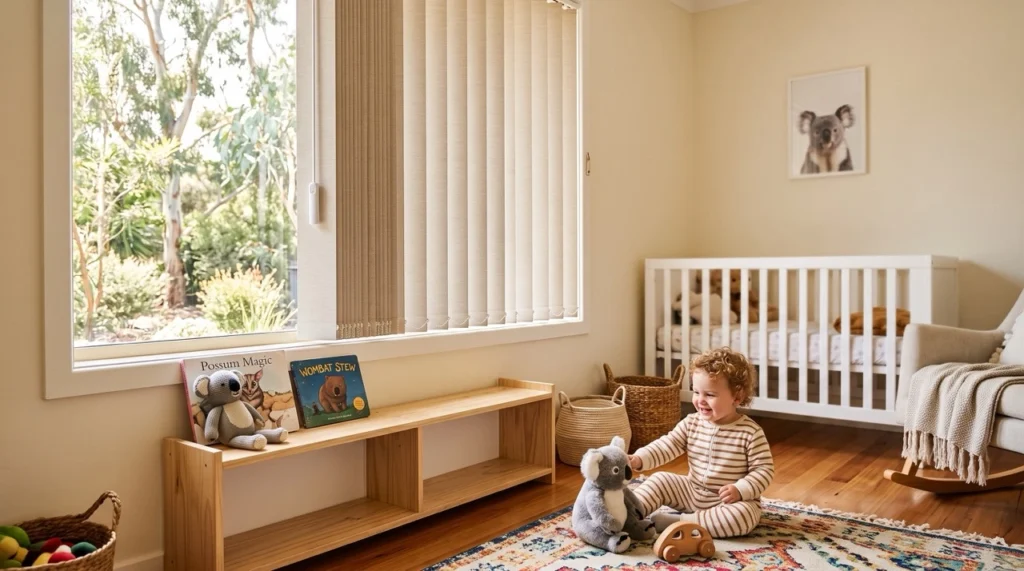
Worth taking seriously, not just as a style choice. Australian Consumer Law sets a mandatory safety standard for corded internal window coverings: a loose cord can’t form a loop 220mm or longer at or below 1,600mm from the floor, and any cleat used to secure a cord has to sit above that height too. It’s a real rule with real teeth behind it, not just a suggestion – non-compliant installations can carry serious penalties for suppliers.
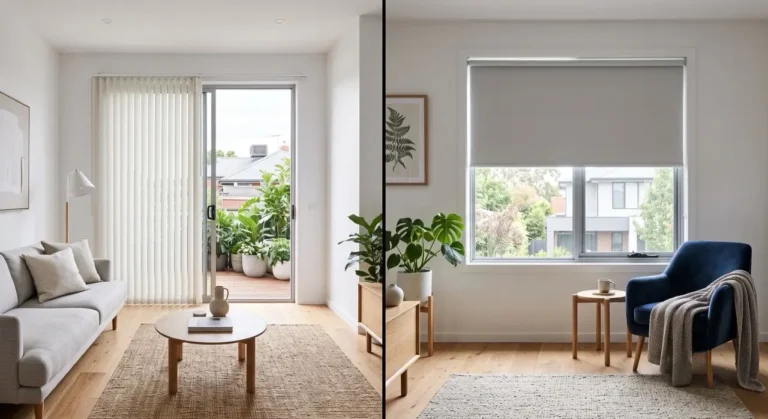
The simpler fix is just skipping the cord altogether. Wand-operated or chainless vertical blinds – which we covered when we walked through control systems for sliding doors – remove the hazard rather than managing it. If budget’s a factor, a cordless spring-operated roller blind does the same job for less.
The Quick Version
| Room | Best pick | Why |
|---|---|---|
| Living room | Light filtering vertical blinds | Balances brightness and privacy |
| Bedroom | Blockout | Full dark, better sleep, some insulation |
| Bathroom / laundry | PVC shutters or vinyl blinds | Handles moisture without warping |
| Kitchen | Vinyl or PVC, easy-wipe | Grease and splashes clean off fast |
| Home office | Sunscreen or light filtering, tilt control | Cuts glare, keeps daylight |
| Kids’ rooms | Cordless – wand or chainless | Removes strangulation risk entirely |
One House, Several Answers
None of this needs to be complicated. The short version: think about what each room is actually for, which way it faces, and who’s using it, before worrying about colour or style. Once those are sorted, the aesthetic choices are the easy part.
If sorting six different rooms sounds like a lot to plan alone, book a free in-home consultation – we’ll walk through the whole house in one visit and match each room properly, rather than guessing from one sample in a showroom.
A Few Questions We Get Asked
Can I use the same blind style throughout the house for a consistent look?
You can, but it usually means compromising somewhere – most often the bathroom, where fabric doesn’t hold up, or the bedroom, where non-blockout options fall short on darkness. A consistent colour palette across different blind types usually achieves the cohesive look people actually want, without the trade-offs.
Is blockout overkill for a living room?
Not overkill, just often unnecessary. Most living rooms benefit more from flexibility throughout the day than full darkness, unless it’s genuinely a dedicated media room.
What’s the minimum I should worry about for kids’ rooms?
At minimum, make sure any existing corded blinds have a working cord cleat fixed well above 1.6 metres. But if you’re replacing blinds anyway, going cordless removes the issue rather than managing it.
Do I need different fabric for every single room, or can I simplify?
You can simplify to two or three fabric types across the whole house – light filtering, blockout, and a moisture-resistant vinyl for wet areas – and that covers almost every room without needing a bespoke solution for each one.
Next Up
We’re staying on the safety thread next week, going deeper into child-safe blinds specifically – the full rundown on cord regulations, cordless retrofits, and what to actually check if you’ve got older blinds already installed in a home with young kids.