Outdoor Blinds in Melbourne: The Complete Guide to Alfresco, Patio and Ziptrak Blinds
Reading time:
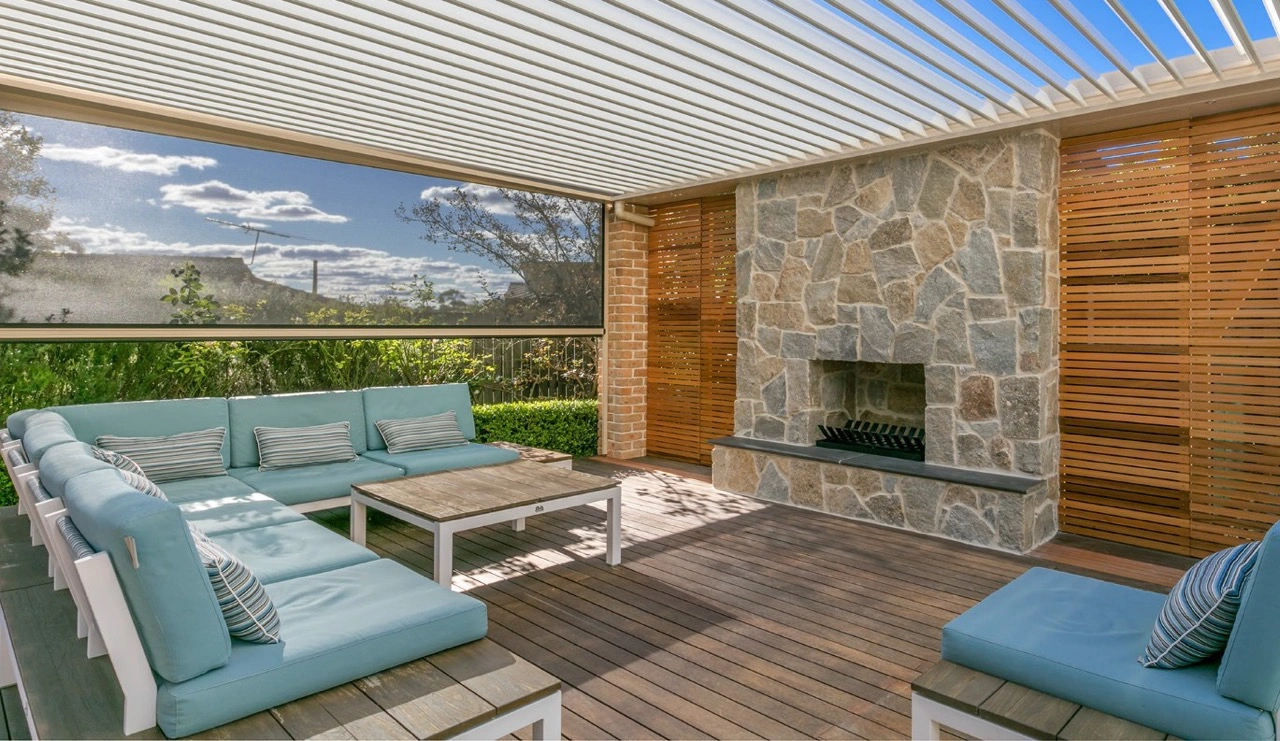
Outdoor blinds are track-guided screens of mesh, PVC or fabric that lower to enclose a patio, alfresco or pergola, and in Melbourne they’re one of the most effective ways to get year-round use out of an outdoor space. A good system blocks wind and rain, cuts glare and UV, and turns three or four usable months into closer to twelve.
If you’ve ever cancelled an outdoor dinner because of a westerly change, or watched your outdoor furniture fade a shade lighter every summer, this guide is for you. We’ll cover what outdoor blinds actually are, the main types of outdoor blinds in Melbourne, what genuinely affects the price, and how to work out which system suits your home.
What are outdoor blinds in Melbourne and how do they work?
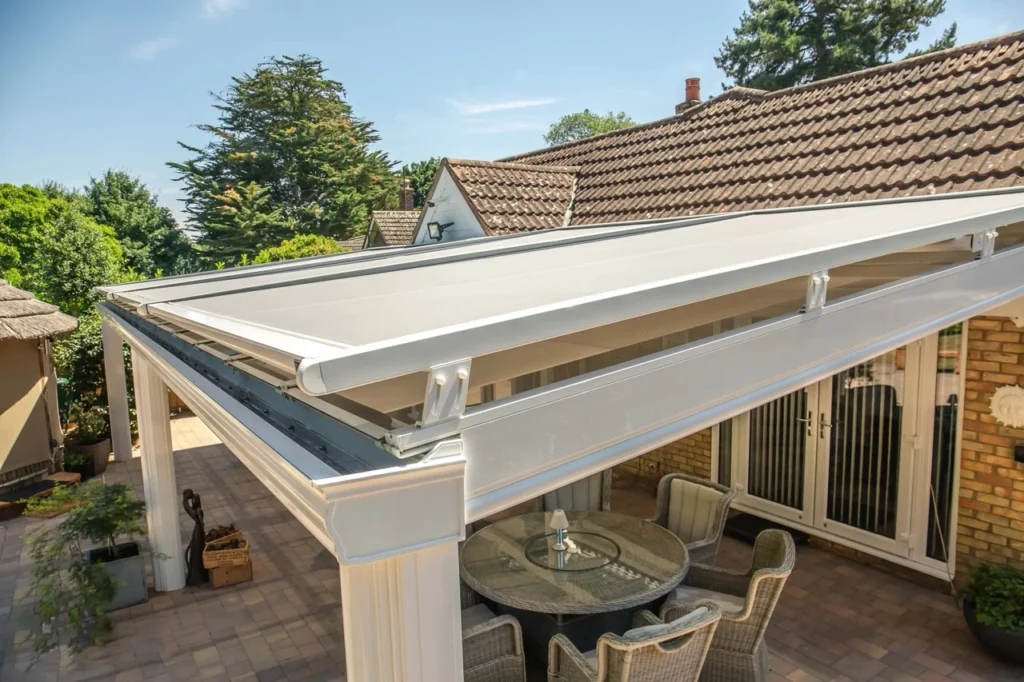
Outdoor blinds sit on vertical or angled tracks fixed to either side of an opening – a pergola, veranda, alfresco or shop front. The blind itself is a continuous sheet of mesh, PVC or acrylic fabric that runs up and down inside those tracks, so it stays taut and sealed at the edges even in wind, rather than billowing loose like a standard curtain or umbrella.
That track-guided seal is what separates outdoor blinds from a fixed awning. An awning shades from above and works well for direct overhead sun, but it doesn’t fully enclose a space or stop wind and driving rain from the side. Outdoor blinds do both, which is why they’re the more common choice for anyone trying to genuinely extend how a patio or alfresco gets used through the year, not just shade it on hot days.
Explore IMEKO’s full outdoor blinds range for the systems, fabrics and colours available.
Available types of outdoor blinds in Melbourne?
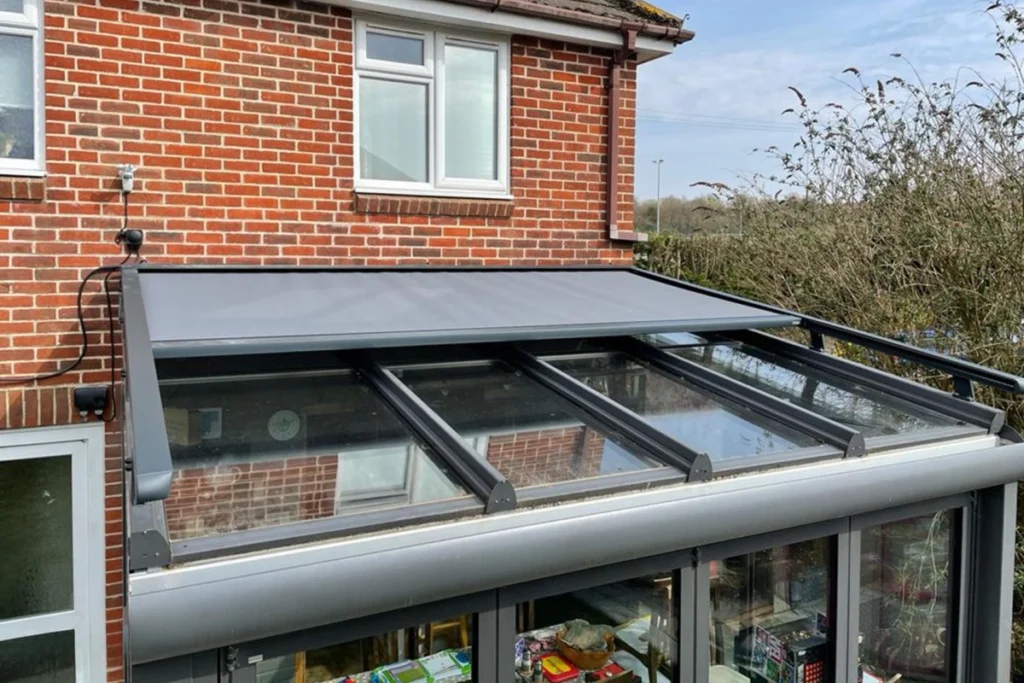
Most Melbourne homes and businesses choose from five broad categories. None of them is universally “best” – the right one depends on how the space is used and what problem you’re solving for.
| Type | Best for | Weather protection | Privacy | Typical setting |
|---|---|---|---|---|
| Ziptrak / track-guided mesh | Everyday alfresco living, wind and sun control | Strong wind resistance, good UV block, light rain resistance | High when fully lowered | Most Melbourne homes, cafes |
| PVC / clear café blinds | Enclosing a space against rain and cold | Best rain protection; can trap heat in full sun | Low – see-through by design | Restaurant and café-style enclosed patios |
| Fixed panel or framed screens | A permanent, set-and-forget wind break | Good, but not adjustable | High and permanent | Side boundaries, areas that don’t need to open up |
| Manual outdoor roller blinds | Smaller openings on a budget | Moderate sun and wind protection | Moderate | Secondary verandahs, smaller patios |
| Motorised outdoor blinds | Larger openings, multiple blinds, convenience | Same as the fabric chosen, plus scheduling | Depends on fabric | Larger alfrescos, commercial spaces |
A lot of Melbourne homes end up mixing two types – say, Ziptrak mesh on the exposed western side of a pergola and a fixed panel on a side boundary that never needs to open.
Are outdoor blinds actually worth it in Melbourne?
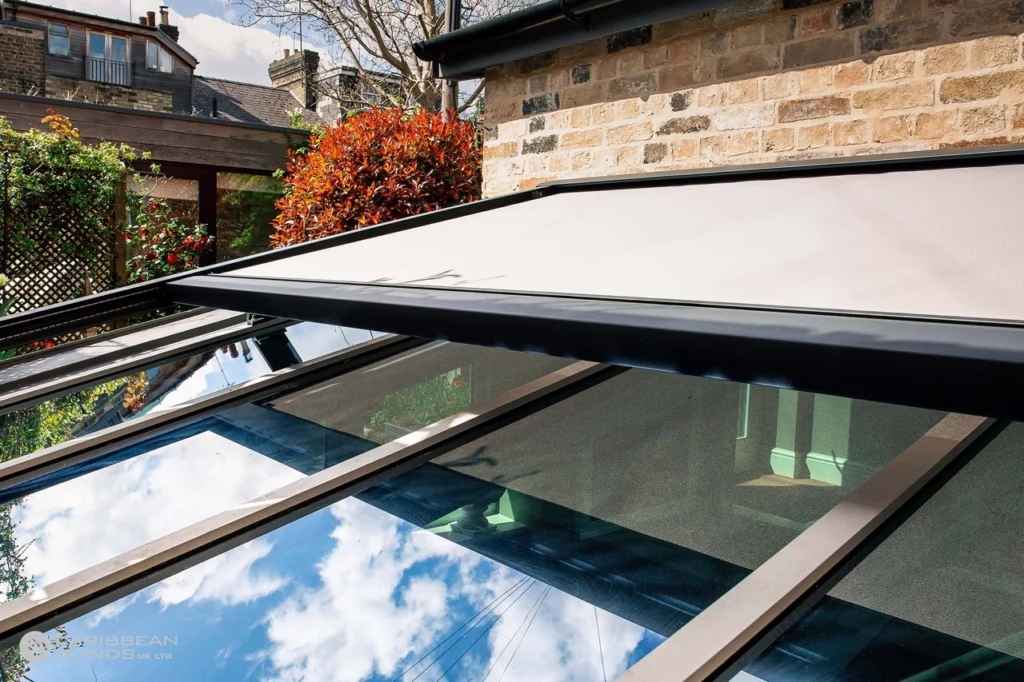
For most homes with an alfresco, pergola or veranda that only gets used a few months a year, yes. Two things drive that: usable space, and heat.
On usable space, the maths is straightforward – a patio that’s only comfortable from November to March is being paid for year-round but used for a quarter of it. Enclosing it with blinds is usually the single change that gets the most extra use out of an existing structure, without the cost or approvals process of a full room addition.
On heat, the case is backed by more than opinion. The Australian Government’s YourHome guide notes that direct sun striking an unshaded surface delivers roughly the same heat as a single bar radiator per square metre, and that effective external shading can block up to 90% of that heat before it ever reaches the space behind it. Because outdoor blinds sit outside the building line entirely, they get the full benefit of that principle – they’re stopping heat and glare at the source, rather than managing it after it’s already built up under a pergola roof.
Melbourne’s climate makes this more relevant than in most Australian cities. A hot, sunny afternoon can turn into a cold, windy one within the hour once a southerly change comes through – for current seasonal and temperature data, the Bureau of Meteorology publishes detailed Melbourne climate statistics. A well-chosen outdoor blind is one of the few upgrades that helps with both ends of that swing: shade and airflow on the hot side, a wind seal on the cold side.
How much do outdoor blinds cost in Melbourne?
Cost depends mainly on three things: the width and number of openings being covered, the blind type (Ziptrak and motorised systems sit above manual roller blinds), and the fabric – mesh, PVC and acrylic all price differently.
As a general shape: manual roller blinds are the most budget-friendly entry point, Ziptrak and other track-guided systems sit in the mid-to-premium range and are the most common choice for a full alfresco, and motorised multi-blind setups sit at the top of the range once you factor in the drive units and any smart-home integration. Rather than guess at your own numbers here, the fastest way to see an accurate figure is a free in-home measure – every property’s openings, orientation and existing structure are different enough that a real quote beats any online estimate.
Ziptrak vs traditional outdoor blinds: what’s the difference?
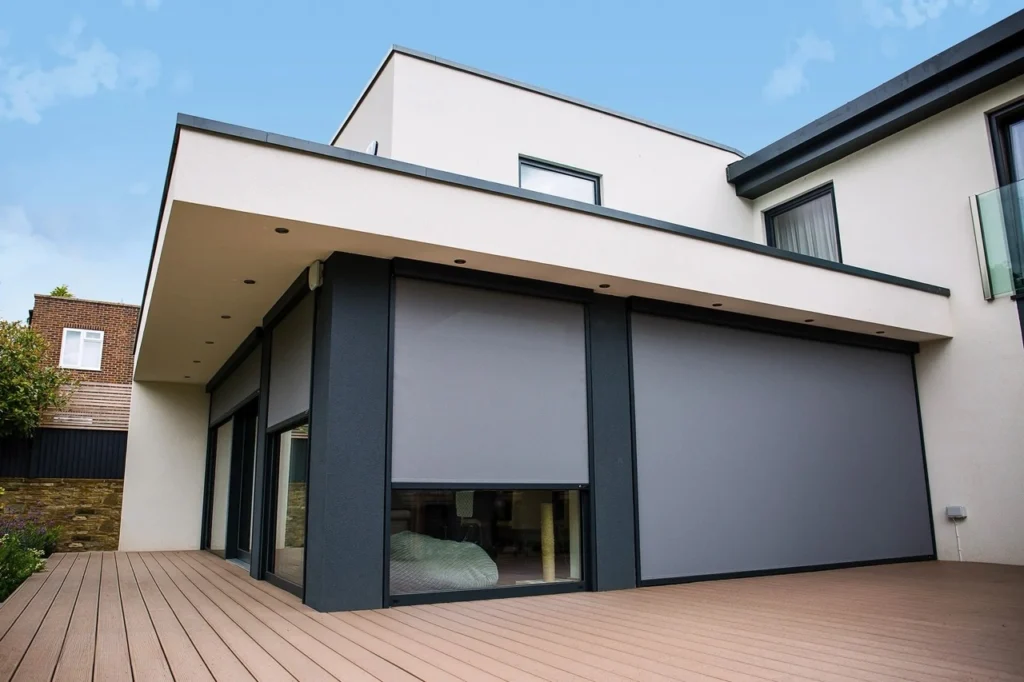
Ziptrak (and similar track-guided brands) use a sealed vertical track system, so the blind stays taut, doesn’t billow in wind, and can be locked at any height without gaps at the sides. A traditional external blind – think a basic roller or a loosely hung PVC curtain – is generally cheaper up front but performs worse in Melbourne’s wind and doesn’t seal as tightly.
The short version: if the space gets genuine wind exposure or you want to leave the blind partway down, track-guided systems like Ziptrak are worth the extra cost. If it’s a sheltered spot used occasionally, a simpler system may be all you need. We’re covering this trade-off in full detail in an upcoming cluster article – for now, a member of the IMEKO team can advise which fits your specific opening during a free consultation.
Outdoor blinds vs awnings: which is right for your space?
Awnings shade from above and suit spaces where the main problem is overhead sun rather than wind or rain – think a north-facing window or a small deck that just needs glare control. Outdoor blinds enclose the sides as well, which is what actually turns a patio into an extra room rather than just a shadier version of the same patio.
If you’re only trying to solve for midday sun, an awning may be enough and is usually the lower-cost option. If wind, driving rain or western sun are the real issue – common on Melbourne’s more exposed suburbs – outdoor blinds do more of the job. We’ll compare these side by side in more depth in a dedicated article soon; for a decision specific to your home’s orientation, our team can talk it through at measure.
How do I choose the right outdoor blinds for my home or business?
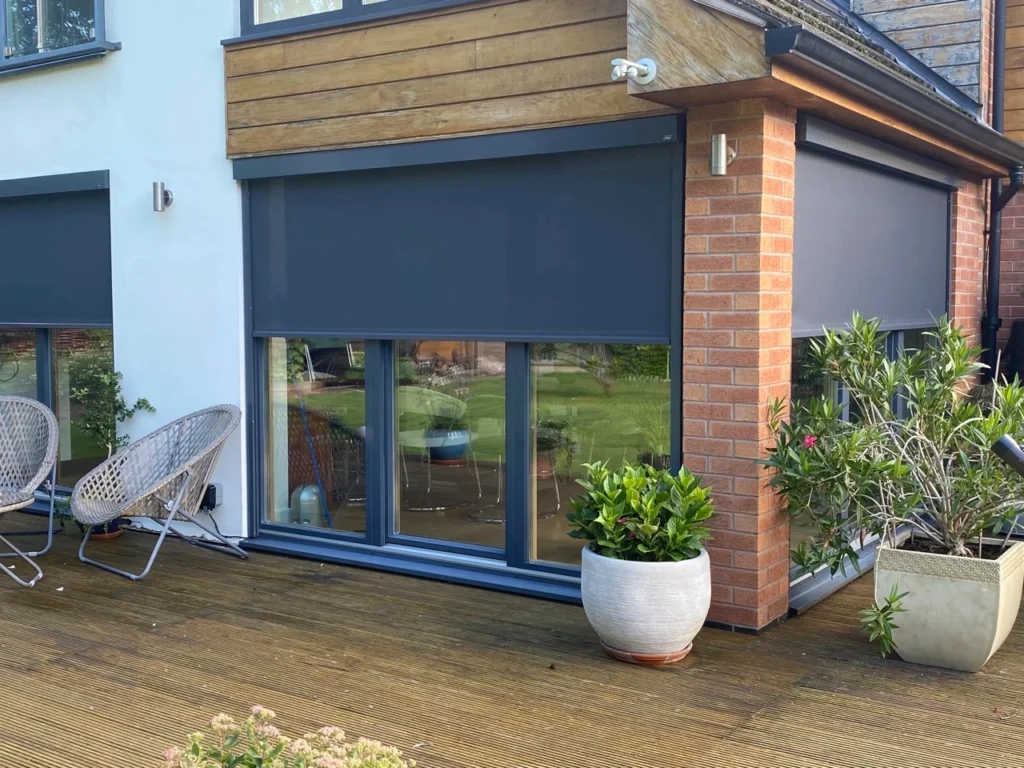
A few questions narrow this down quickly:
- Which direction does the space face?
West-facing openings get the harshest late-afternoon sun and benefit most from full-coverage mesh or motorisation. South-facing spaces need less sun protection but still benefit from a wind seal. - How exposed is it to wind?
Elevated decks, corner blocks and anything near open ground tend to need track-guided systems rather than loose-hanging blinds. - Is it a home or a commercial space?
Cafes and restaurants generally lean towards PVC for full weatherproofing and higher footfall durability; homes more often choose mesh for everyday comfort and view retention. - How often will it actually be used?
A blind that’s raised and lowered daily is worth motorising. One that goes down for the season can stay manual. - What’s the budget for the whole opening, not just one panel?
Multi-panel alfrescos add up fast – get a full-space quote before comparing per-panel prices.
IMEKO measures and installs outdoor blinds across greater Melbourne, from the inner suburbs out to Point Cook, Craigieburn and the eastern suburbs – check our full list of locations to confirm we cover your area, then book a free in-home consultation and we’ll measure up and talk through the right system for your space.
Frequently asked questions
Do outdoor blinds actually keep an alfresco cooler in summer?
Yes. Because they sit outside the structure, they block direct sun before it hits glass, decking or furniture. The Australian Government’s YourHome guide notes effective external shading can block up to 90% of the heat that would otherwise reach a surface.
Can outdoor blinds be left down during a Melbourne storm?
It depends on the product’s wind rating, which varies by brand and fabric. As general practice, track-guided systems handle everyday wind well, but any outdoor blind should be raised ahead of a severe weather or damaging wind warning. Check the specific wind rating for your chosen system when you get a quote.
Do I need council approval to install outdoor blinds in Melbourne?
Most straightforward installations onto an existing eave, pergola or veranda don’t require a planning permit, but this can vary by council, heritage overlay and whether the structure itself is new. If you’re unsure, it’s worth a quick check with your local council or raising it with our team during your measure – we’re happy to flag anything unusual before you commit.
What’s the difference between Ziptrak and a standard outdoor blind?
Ziptrak and similar track-guided systems use sealed side tracks so the blind stays taut and gap-free at any height, which handles Melbourne wind noticeably better than a loosely hung blind. A full comparison is coming as part of this series.
Can outdoor blinds be motorised and connected to a smart home system?
Yes – most modern outdoor blind systems, including Ziptrak, offer a motorised option with app or wall-switch control, and can typically be scheduled or grouped with other smart-home devices.
How long do outdoor blinds typically last in Melbourne conditions?
It varies by fabric and exposure, but quality track-guided systems with UV-stable fabric are built to perform for many years with basic care – mainly keeping tracks clear of debris and giving the fabric an occasional clean. Fabric exposed to constant direct western sun will generally need attention sooner than a more sheltered, south-facing install.
References
- Australian Government, YourHome – Shading
- Bureau of Meteorology – Climate statistics for Melbourne
Ready to enclose your outdoor space?
Every home’s openings, orientation and existing structure are different, so the most accurate way to see cost and product fit is a free in-home measure. Book a free consultation and IMEKO will walk you through the right system for your space – no guesswork, no obligation.
If you already have an outdoor space you’re looking to enclose, our earlier guide on Outdoor Alfresco Blinds Melbourne covers more on getting year-round use out of an alfresco – and once the Ziptrak comparison, cost guide and outdoor blinds vs awnings articles in this series are live, we’ll link them in here too.