Child-Safe Blinds: What Melbourne Parents Should Know
Reading time:
This is one of those home safety topics (child-safe blinds) that’s easy to underestimate, because the risk doesn’t look like much. A blind cord looks like exactly what it is – a cord. It doesn’t announce itself as a hazard the way an exposed power point or a gap in a pool fence does. But it’s serious enough that Australia has two separate mandatory federal standards governing it, and Victoria added a third, rental-specific layer of rules in December 2025 that a lot of people – tenants and landlords alike – still don’t know about.
Why This One’s Different From Most Home Hazards
Young children are particularly vulnerable for reasons that aren’t obvious until someone explains them. Their heads are disproportionately heavy relative to their bodies, their muscle control isn’t developed enough to free them once caught, and their airways are narrow enough that restriction becomes dangerous quickly.
The part that catches parents off guard is how quiet it is. There’s typically no cry for help, which is exactly why it tends to happen in ordinary, supervised-feeling spaces like a bedroom, not somewhere obviously risky. None of this is meant to alarm you unnecessarily. It’s a genuinely fixable, preventable risk once you know what to look for.
The National Rule, Properly Explained
Australia actually has two separate mandatory standards covering this, which trips people up because they sound like the same thing.
The first governs supply – the Trade Practices (Consumer Product Safety Standard – Corded Internal Window Coverings) Regulations 2010, in effect since 30 December 2010. It requires warning labels on corded products and cord-safety components included at the point of sale.
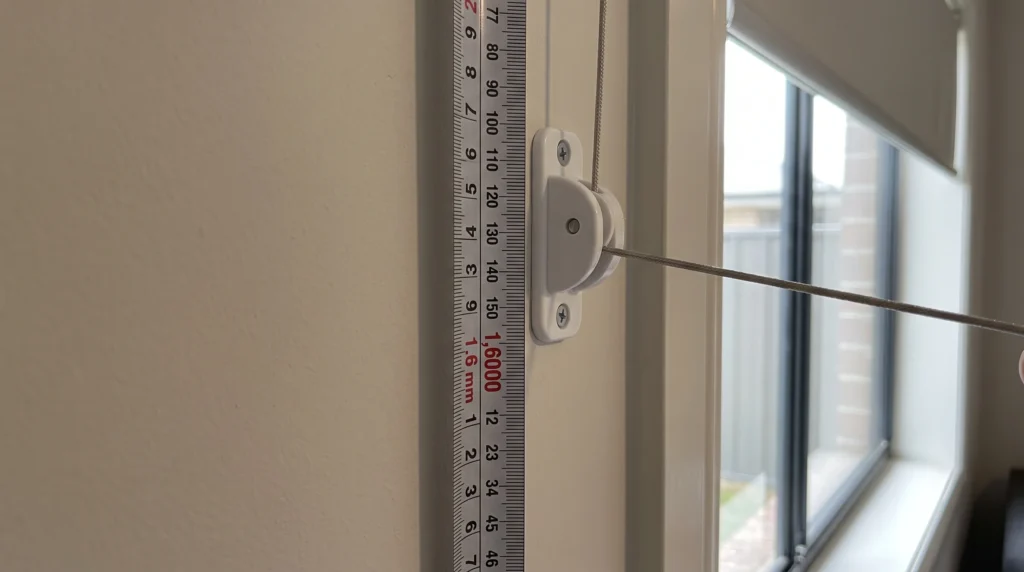
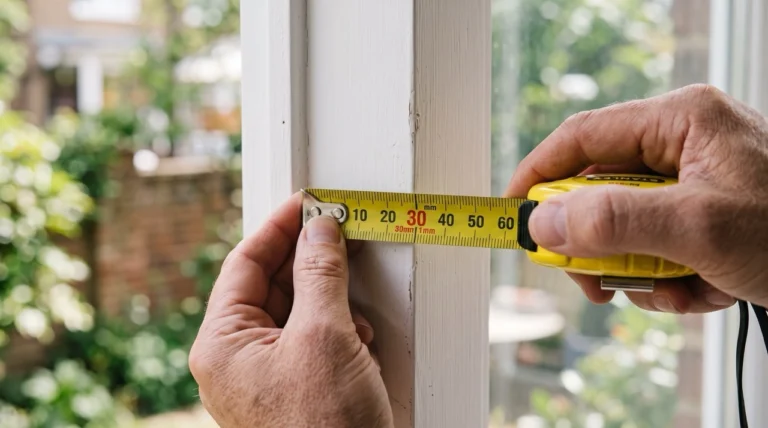
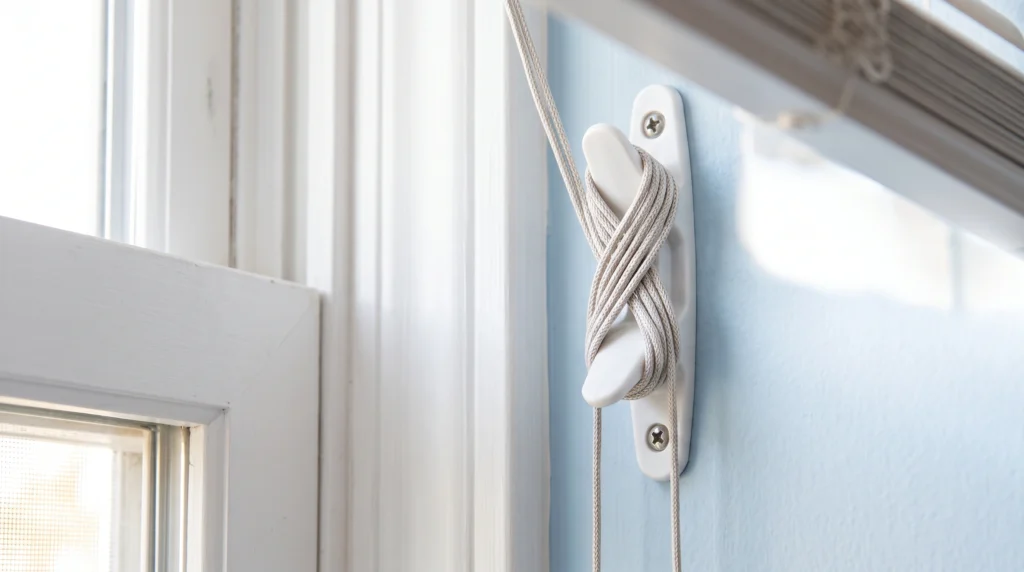
The second governs installation – the Competition and Consumer (Corded Internal Window Coverings) Safety Standard 2014, in effect since 1 January 2015. This is the one with the specific measurement: a loose cord cannot form a loop 220mm or longer at less than 1,600mm above floor level. Cord guides and cleats also can’t be installed below that 1,600mm line, unless the guide is rated to hold at least 70 newtons of tension. Anyone installing a corded blind or curtain professionally has to attach a label with their name and contact details, and follow the manufacturer’s installation instructions exactly.
Both standards apply to domestic dwellings. They don’t cover caravans, mobile homes, or boats.
The Part Most People Haven’t Heard Yet: Victoria’s New Rental Rules
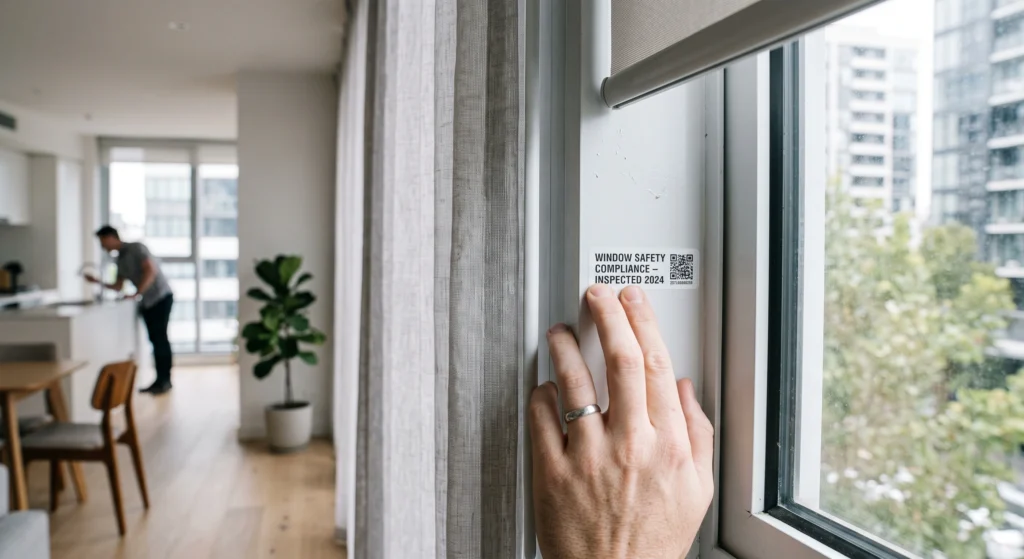
Here’s where it gets genuinely important if you’re in Melbourne specifically, and it’s recent enough that a lot of existing advice online hasn’t caught up with it.
Until late 2025, the 2015 installation standard had a loophole: it only applied to blinds and curtains installed after 2015. Anything installed before that date was technically exempt – which, in a city full of older housing stock, was a lot of window coverings.
As of 1 December 2025, that exemption is gone for Victorian rental properties. Every rental property in Victoria now has to meet the blind cord safety standard, regardless of when the curtains or blinds were installed. It’s now one of 15 categories of minimum standards that all Victorian rental properties are legally required to meet. A few days earlier, from 25 November 2025, it also became an offence for a rental provider or agent to even advertise or offer a property that doesn’t meet these minimum standards.
There’s a practical change for tenants too: renters now have the right to request urgent repairs for non-compliant blind cords, and – unusually – the right to install a cord cleat or guide themselves, without needing the landlord’s or agent’s permission first. Kidsafe Victoria’s CEO welcomed the change publicly at the time, describing it as a reform that had taken years of advocacy to secure.
If you’re a landlord or property manager with older rental stock in Melbourne, this is genuinely worth checking now rather than waiting for a compliance issue to surface. And if you’re a tenant, it’s worth knowing you don’t need to wait for permission anymore.
Why This Actually Matters: The Numbers
According to Kidsafe Victoria, one or two Australian children die every year from an injury involving curtain or blind cords, with at least 21 deaths recorded in Australia since 2001. The Victorian Government cited the same “up to two children a year” figure when announcing the December 2025 reform.
It’s also not purely a problem with old, neglected blinds. In a 2016 compliance sweep, the ACCC checked corded blinds and curtains across 131 display homes and found that only around 10% would have fully complied with the mandatory standard if sold as installed – missing cord guides, missing cleats, missing warning labels, or all three. That’s new-build project homes, not just older housing.
What to Actually Do About It
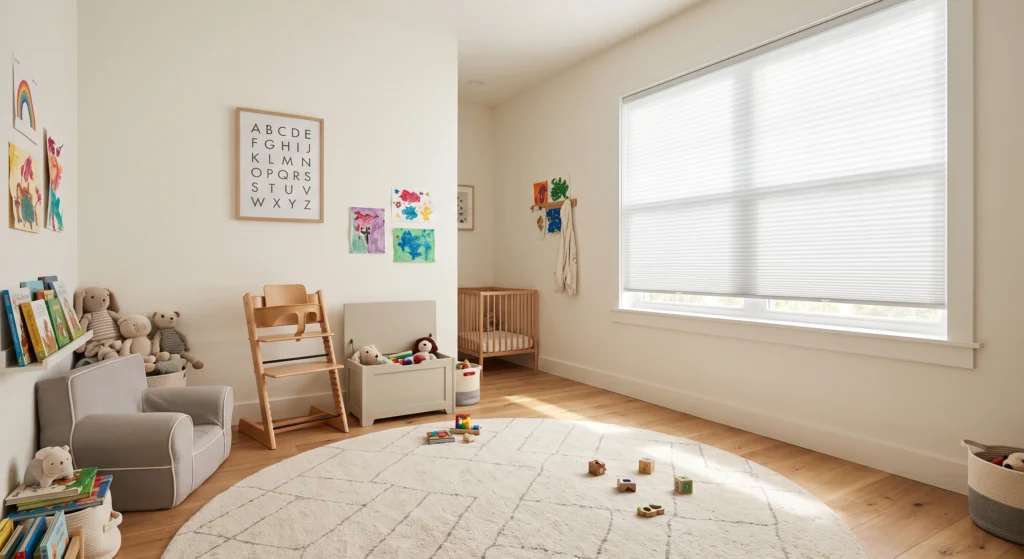
The practical fixes are genuinely simple, and most of them cost nothing:
- Check every room, not just the ones kids spend the most time in. Loose or looped cords in a spare room or hallway are just as much of a risk if a child can reach them.
- Keep cots, beds, highchairs, and climbable furniture away from windows with corded coverings – children reach cords far more often by climbing than by walking straight up to them.
- Secure existing loose cords with a cleat or tension device, fixed firmly to the wall or frame – never with double-sided tape or anything that can be pulled off under load.
- Order a free cord safety kit. Consumer Affairs Victoria provides these at no cost, designed to tension looped cords against a window frame – a genuinely useful five-minute fix for the most common hazard type.
- Never assume newer means safer. As the 2016 display home data shows, compliance gaps happen in new installations too.
The Permanent Fix: Going Cordless
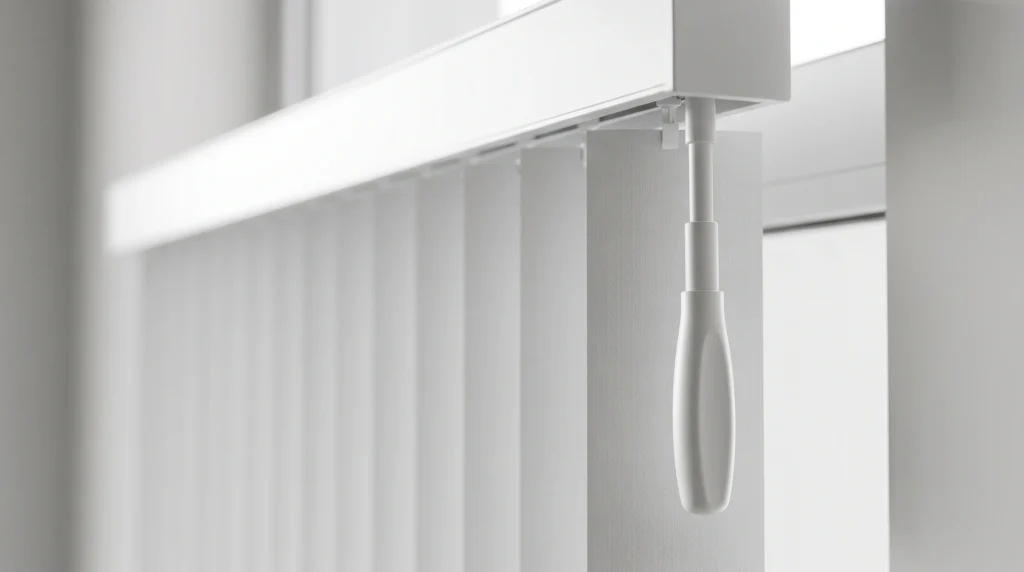
Every fix above manages the risk. The only option that actually removes it is choosing a window covering that was never corded to begin with.
We touched on this when we walked through control systems for vertical blinds earlier in this series – wand-operated and chainless louvre designs eliminate the hazard at the source. No loop to secure, no cleat to install, no safety device that can later be removed or forgotten.
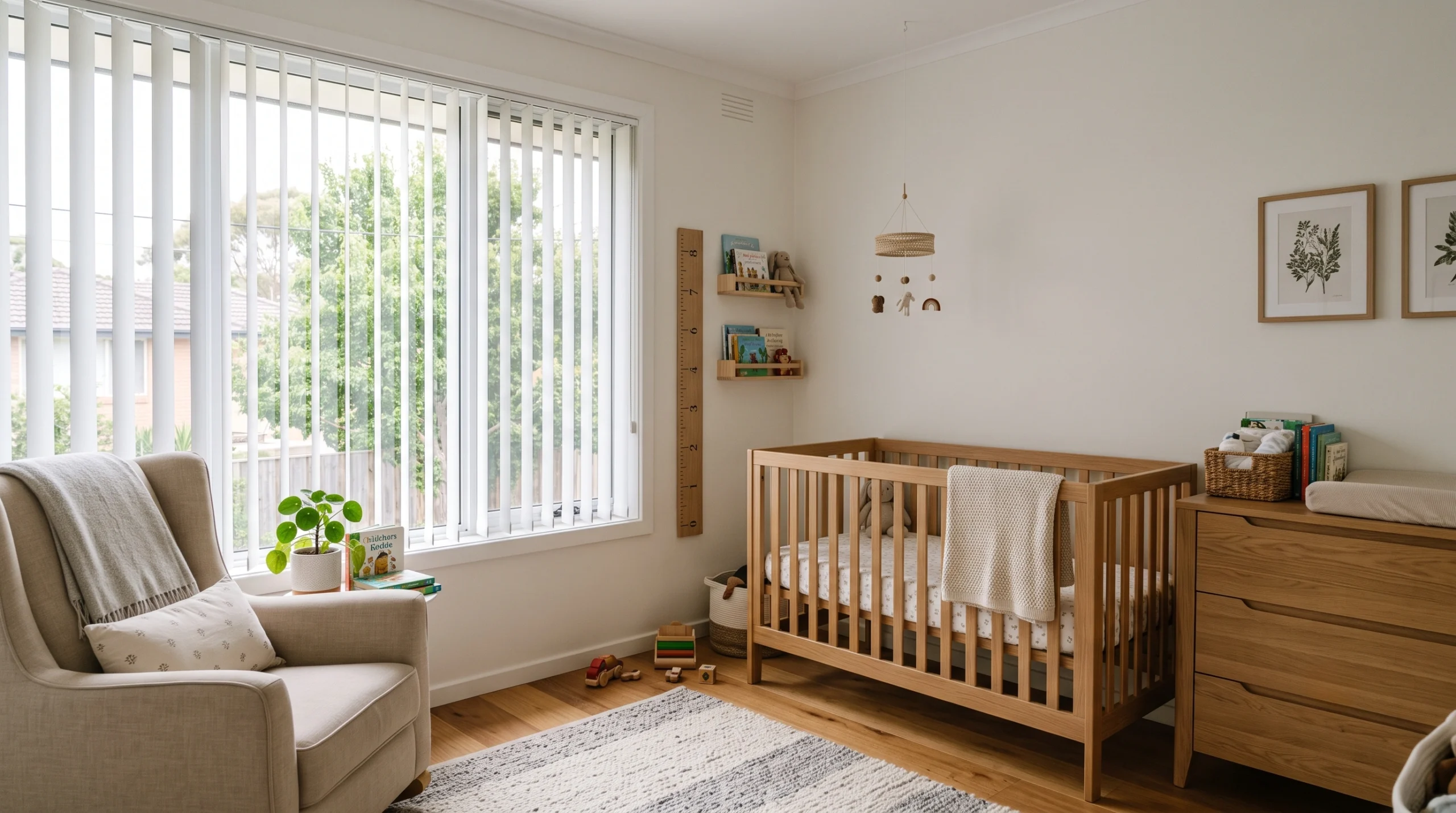
For a nursery, a kids’ bedroom, or really any room in a home with young children, this is the option we’d genuinely recommend starting with, rather than retrofitting a corded blind after the fact.
Cord Safety at a Glance
| Requirement | Detail |
|---|---|
| Maximum loop size | Under 220mm |
| Height restriction | Cleats and cord guides must sit above 1,600mm from the floor |
| Applies to | All Victorian rental properties, any installation date, from Dec 2025 |
| Tenant rights (VIC) | Can request urgent repairs; can install safety devices without permission |
| Free help | Cord safety kits from Consumer Affairs Victoria, no cost |
| Permanent fix | Cordless – wand or chainless operation |
A Few Common Questions
Do I need to replace all my corded blinds immediately?
Not necessarily. A properly fitted cleat or tension device brings most existing blinds into compliance. Going cordless is the more permanent option, but rarely an emergency same-week fix – unless you’re a Victorian rental provider bringing a property up to the new standard.
Are vertical blinds safer than other types by default?
No – it comes down to the control mechanism, not the blind style. A corded vertical blind carries the same risk as a corded roller or venetian. What matters is whether it’s wand-operated, chainless, or otherwise cordless.
Does the Victorian rental change apply to owner-occupied homes too?
No, it specifically targets rental properties. Owner-occupied homes remain covered by the original national standard (anything installed since 2015) – though nothing stops any homeowner voluntarily upgrading older blinds.
Where do I get a free safety kit?
Consumer Affairs Victoria offers them at no charge – see the references below.
Coming Up Next
We’re providing a valuable cost guide next, What Melbourne Homeowners Actually Pay for Plantation Shutters.
Got older blinds in a Melbourne home or rental property that need a proper look?
Book a free consultation and we’ll assess what’s there and talk through cordless options where they make sense.
Sources
- ACCC Product Safety – Blinds, Curtains and Window Fittings Mandatory Standard
- Premier of Victoria – New Blind Cord Standards to Protect Kids
- Kidsafe Victoria – Curtain & Blind Cord Safety
- Consumer Affairs Victoria – Curtain and Blind Cord Safety (free kits)
- ACCC – Warns of Dangers of Loose Blind and Curtain Cords