How to Measure Windows for Blinds: A Step-by-Step Melbourne Guide
Reading time:
Here’s a fact worth knowing before you pick up a tape measure: poor measuring is one of the most common reasons custom window treatments end up returned or remade. Not a fabric fault, not a manufacturing error – just a number written down wrong, or a decision made without knowing it needed to be made first.
The good news is that measuring for blinds isn’t actually difficult. It just has a handful of decision points that matter more than people expect, and this guide walks through all of them, in millimetres, the way it’s actually done here.
How to Measure Windows for Blinds: Step One, Inside or Outside Mount?
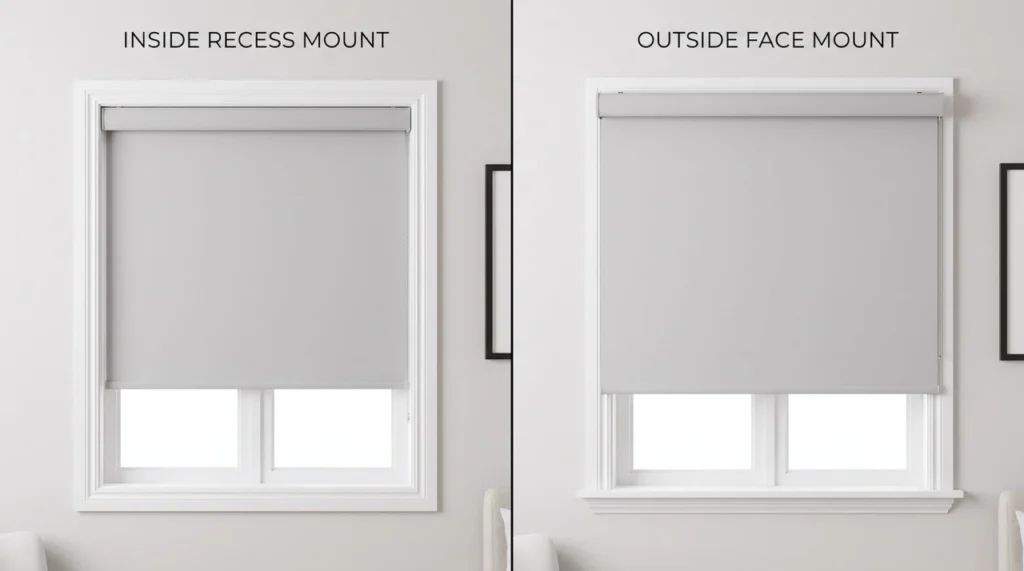
Everything else depends on this decision, so make it first.
Inside (recess) mount: the blind sits within the window frame itself, flush against the glass. It gives a neat, built-in look, but needs enough usable depth in the frame – check for window locks, cranks, or handles that might get in the way, since these can rule out an inside mount even on a frame that looks deep enough at a glance.
Outside (face) mount sits the blind on the wall or architrave, covering the window opening rather than sitting inside it. This is the go-to for windows without enough recess depth, for windows you want to appear larger, and for anything where you want maximum light block with no gaps at the edges.
If you’re not sure which your window can actually take, this is genuinely one of the easier things to get a second opinion on before committing to a measurement.
What You’ll Need
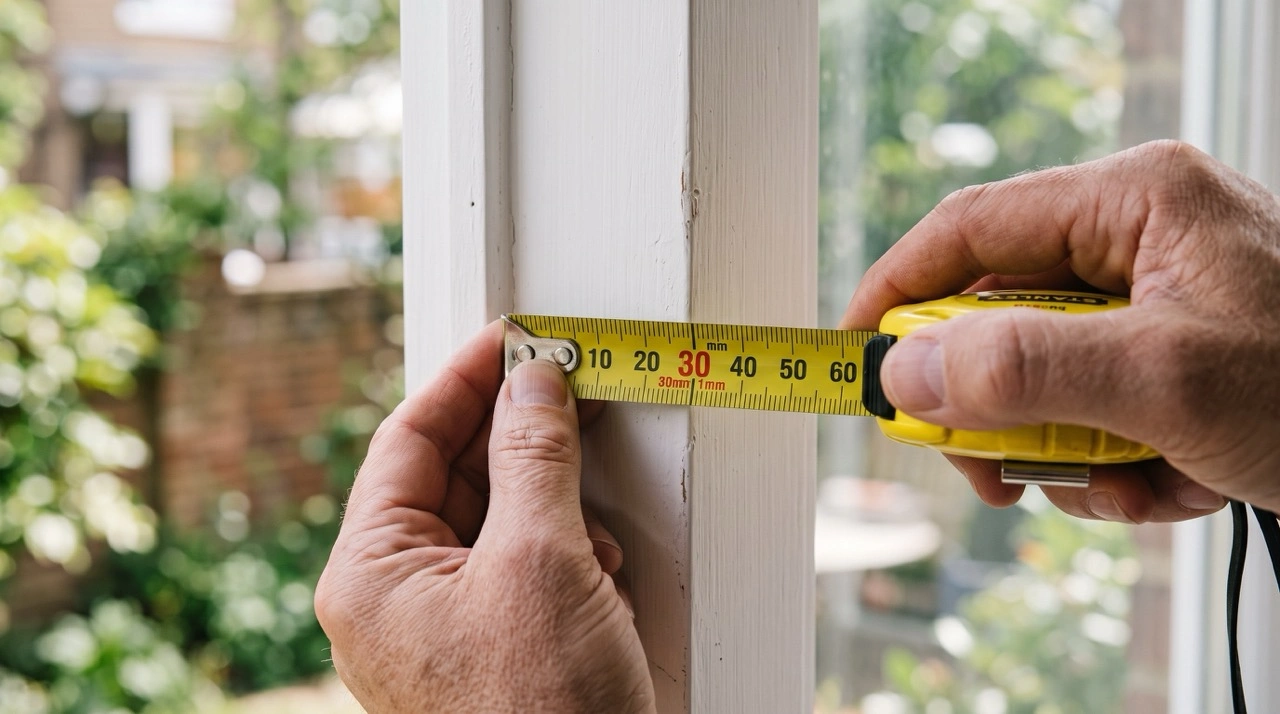
- A metal tape measure – fabric ones stretch slightly, which is exactly the kind of small error that compounds into a bad fit
- A pencil and paper, or your phone’s notes app
- A step ladder for anything above easy reach
- Fifteen minutes and a bit of patience
Measuring for an Inside Mount
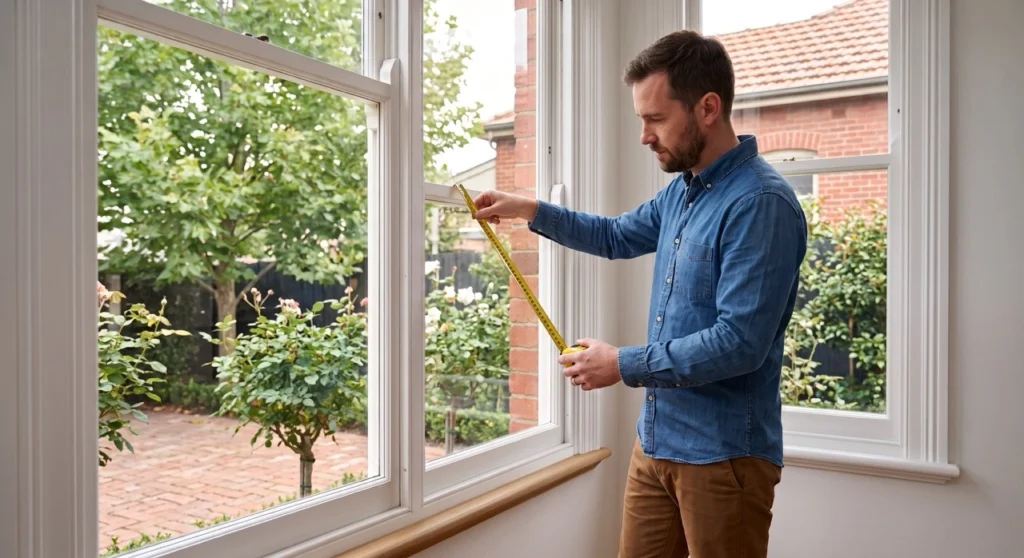
Width: Measure the frame opening at the top, middle, and bottom, in millimetres. Record the smallest of the three. Window frames are rarely perfectly square, and using the smallest measurement means the finished blind won’t bind or rub against the narrowest point.
Height: Same principle, different axis – measure at the left, middle, and right of the frame, and record the smallest.
Check for square: Measure both diagonals of the window, corner to corner. If they differ by more than about 10mm, the frame is noticeably out of square, and that’s worth flagging to whoever’s making your blind rather than discovering it after installation.
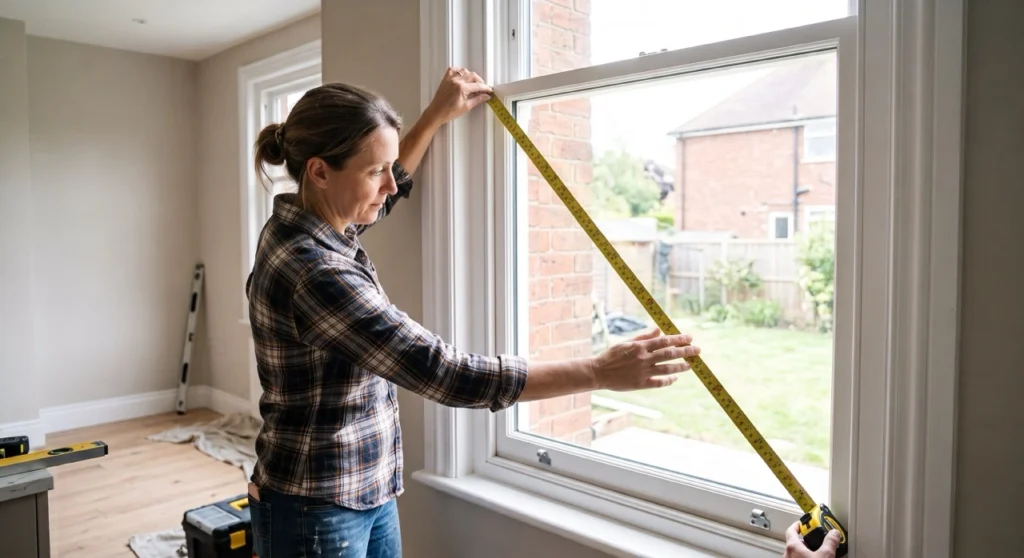
Depth: Measure from the front of the frame back to the glass, at a few points. Different blind types need different minimum depths, so this number matters more for some styles (like venetian blinds) than others.
Measuring for an Outside Mount
Width: Measure the full width you want covered – typically the window opening plus extra coverage on each side for light blockage and privacy. Sixty to seventy-five millimetres of overlap per side is a common, sensible default, though it can go wider if you specifically want maximum blockout.
Height: Decide first where you want the top of the blind to sit – usually 50 to 75mm above the window opening, enough to clear the frame and give the headrail somewhere to mount – then measure down to wherever you want the blind to finish.
Frameless windows or windows with architraves: For a frameless window, extend your width measurement roughly 50mm past the opening on each side. For a window with an architrave, measure to the outer edge of the architrave itself rather than the glass opening.
A Special Case: Sliding Doors
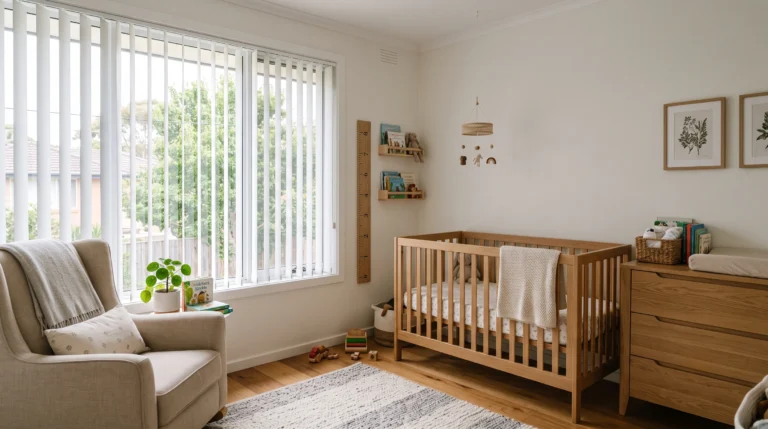
Sliding doors are almost always outside-mount, for the simple reason that most door frames don’t have enough depth for an inside mount to work. We went through this in more specific detail when we covered vertical blinds for sliding doors earlier in the series – including which side to stack the blind on, so it doesn’t block the door you actually use.
A Special Case: Roman Blinds
If you’ve settled on Roman blinds after reading last week’s guide, there’s one extra thing to account for: the folded fabric needs somewhere to stack when the blind is raised. That means a bit of extra allowance at the top of the measurement compared to a roller or venetian blind, so the finished pleats don’t end up sitting awkwardly over the top of the glass. This is exactly the kind of detail worth having a professional confirm rather than guessing.
Common Mistakes Worth Avoiding
- Assuming windows match. Even windows that look identical in the same room can differ by several millimetres. Measure each one individually, every time.
- Using a fabric tape measure. The stretch is small, but it’s exactly the kind of small error that shows up as a gap or a bind once the blind’s installed.
- Forgetting hardware clearance. Window handles, locks, and cranks can all interfere with an inside mount even when the frame technically has enough depth on paper.
- Skipping the diagonal check. An out-of-square window that isn’t caught before ordering is one of the more common causes of a blind that doesn’t sit flush.
When It’s Worth Just Booking a Professional Measure
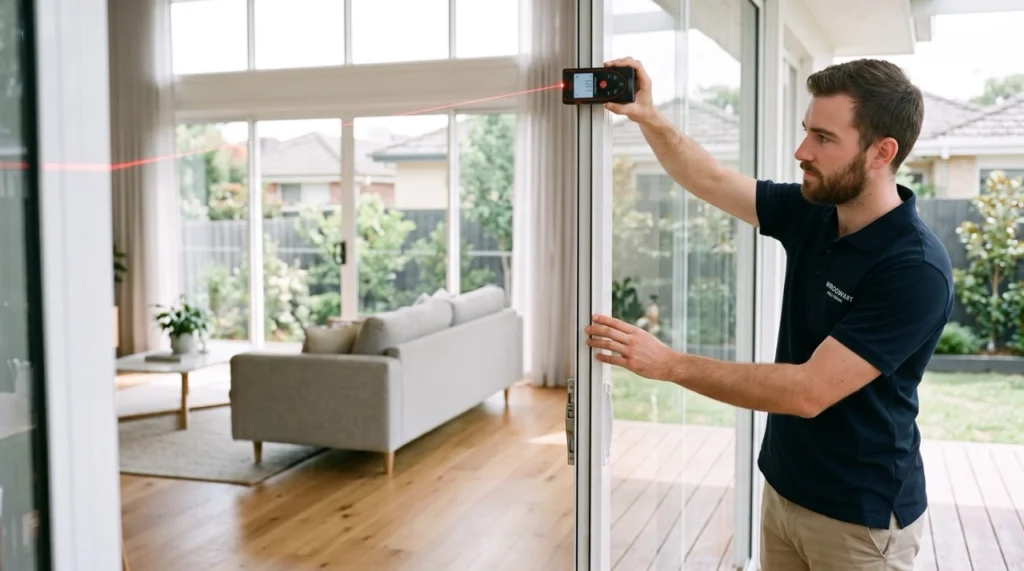
DIY measuring works fine for a straightforward, standard window with a clear inside-or-outside decision already made. It’s worth booking a professional measure instead when you’re dealing with multiple windows across a whole home, an unusually shaped or angled window, a sliding or bi-fold door system, or plantation shutters – which use their own specific deduction conventions that differ from a standard blind, as we mentioned in the shutters pricing guide.
Book a free in-home measure and skip the guesswork entirely – our team brings a laser measure and gets it right the first time, at no cost to you.
Common Questions
Should I measure every window in the house separately, even if they look the same?
Yes, always. Even a few millimetres of difference between two seemingly matching windows is enough to affect fit.
What if my window frame isn’t square?
Use the smallest of your three width and height measurements for an inside mount, and flag the diagonal difference when you order – an out-of-square frame usually still gets a good result; it just needs to be known about upfront.
Do I need different measurements for plantation shutters?
Yes – shutters use their own deduction allowances that differ from standard blinds, which is one of the reasons we’d recommend a professional measure for shutters specifically rather than a DIY one.
Is a professional measure really free?
Yes, through IMEKO Blinds. Given how much a wrong measurement can cost in remakes or returns, it’s one of the easier “free” offers to actually take up.
Coming Up Next
We’re moving from measurement precision to styling next – layering sheer curtains with blinds for a softer, more finished look in Melbourne living rooms.
Catch up on the series: how to clean vertical blinds, vertical vs roller blinds, plantation shutters vs blinds, choosing blinds for every room, child-safe blinds, the plantation shutters cost guide, venetian blinds, and Roman blinds.